‘Work, But This Time Like You Mean It’ – Canberra Theatre Centre (originally published 24 Sept, 2024)
Updated: 4 days ago
Honor Webster-Mannison’s ‘Work, But This Time Like You Mean It’ is a hilarious, condemnatory and deeply Australian narrative. The play exposes the grim reality of youth employed in the fast-food industry, critiquing everything from junior wages to the commercialisation of the human mind.
Directed by Luke Rogers, the abundantly talented actors of Canberra Youth Theatre delivered a truly vivid performance, immersing the audience in a profoundly relatable adolescent experience. Kathleen Kershaw’s creative use of a slanted stage and ball-pit in the production’s set design highlights the trivial nature of the work being performed – the actors’ dynamic use of the ball-pit illustrating how a workplace can violate one’s guileless inner child.

Whilst the play is described as an absurdist comedy, it is not to be confused with traditional absurdist theatre. ‘Work, But This Time Like You Mean It’ suggests that rather than the world being completely devoid of meaning, our Camusian philosophies have instead been constructed by wearying corporations.
Shift Manager (Tom Bryson) communicates through monologue a romanticised idea of working a nine-to-five office job; his yearning for a bright future outside the hostile fast-food industry. Although Bryson’s performance, the animations and the sound design all contribute to numerous belly-laughs from the audience, one is confronted by the reality that, by the age of 22, young people have little energy left for true passion and aspiration. Due to incessant harassment from customers and unsafe working conditions, teenagers’ hopes and dreams consist of sterile, open-plan offices with overhead lighting akin to that of an emergency room.
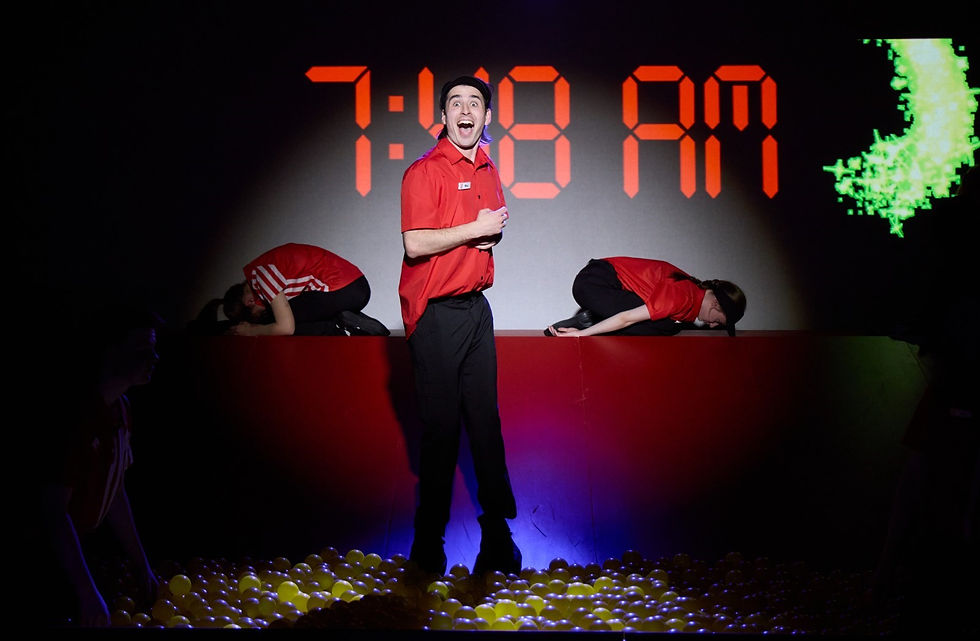
‘Work, But This Time Like You Mean It’ is not reserved in its accusations towards multinational corporations. Register One (Kathleen Dunkerley) begs the audience to consider the absurdity of giving companies control over the human body. She relates the familiar experience of starting your period at work without proper sanitary items, and sheds light on how teenage girls are punished for refusing to maintain social niceties with customers who threaten their safety. The slight element of gore towards the conclusion of the performance demonstrates how companies take little interest in the wellbeing of the minors they employ.
Register Two (Emma Piva) provides poignant political commentary that captures the frustration and confusion of Australian youth. She illustrates how young people are wrongly undervalued in the workforce – earning menial wages “for an hour of your life” – and is reminiscent of the current pressures on the government to outlaw junior wages nationwide. ‘Work, But This Time Like You Mean It’ rejects the commonplace shaming of young people who dare to complain about inherently unjust and malevolent institutions.
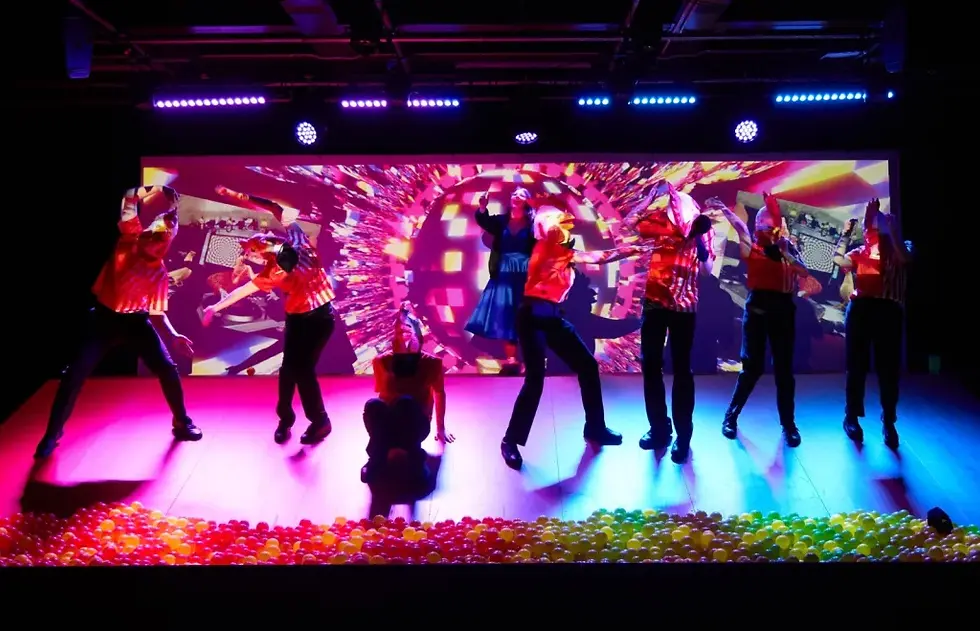
Canberra Youth Theatre’s talented young actors and production team displays the process of manufacturing the human spirit in real time. The audience witnesses living things fried before their very eyes, and none of them chickens. Young people are, in the words of the play’s Literal Deep-Fryer, “something that can be assembled” – yet another cog in the machine of unlimited financial growth.
Honor Webster-Mannison reframes the narrative around toxic-positivity and questions whether big business is the only beneficiary. The play forces guilt onto corporations that facilitate the deterioration of both mental health and young people’s ambitions for the future. This compelling performance by Canberra Youth Theatre is a powerful interrogation of a system that teaches young people how to suffer.
–
‘Work. But This Time Like You Mean It’ is showing at the Canberra Theatre Centre in the Courtyard Studio from 20 – 29 September, 2024.


Comments